Showing posts with label Salacuim Life. Show all posts

September 6, 2008

Leaving Salacuim


Our time was up in Salacuim, we had to go. You can't really sum up what the experience has meant to you with words, how much it has formed you and helped you grow.

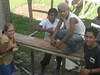
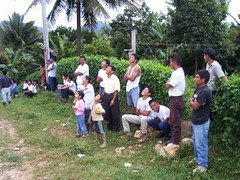
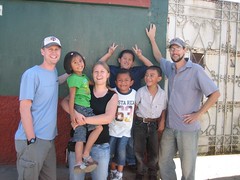
It was hard to leave, sad to say goodbye to friends: the kids that came to be so important to us, the customs. In the last weeks and days I wanted to savor it all, experience all the quirks of village life one last time--stretching out the 5 block walk from the NGO office to our house in to a 2 hour series of random visits instead of the usual 1 hour, joking around with my young buddies who loved to call me mamaá (the q'eqchi' word for old man) and wondering why the same old joke never got old, the afternoon tortrix® and elojito® snack breaks with Kari in the hammocks, the early morning fresh milk deliveries from our friend Hugo Tista on his horse that served as my alarm clock and daily weather report, the visits from Carlos Macz that never seemed to have a purpose, but always seemed to last at least an hour anyway, all of the visits from the group of neighbor girls that especially admired Kari and watching them play Uno or Jenga or draw pictures. Of course sometimes they just liked to stare at us and our strange foreign customs: cooking, washing clothes, reading books. How strange they thought we were:

¿Que es esto? ................A headlamp
¡Que bonita su reloj! ......An $8 Target special
¿Que es esto? ................A garlic press
¡Tienen 3 bombillas! .....The extravagance and excess of our lifestyle

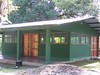
I also wanted to absorb for one last time, all the special daily experiences that life in Guatemala had afforded me. The meals at the local comedor where the Medina's treated us like family and we felt the camaraderie with co-workers from the local NGO. The trips in the "poprocho", the old Toyota that always need a good shove and a slight incline to get started. This was the same vehicle that tossed the driver around like a rag doll on every bump as the seat wasn't attached to the rusted frame. The trips to the river, walks in the jungle, our outdoor jungle shower that was oh-so sweet in the warm evening air, unannounced visits to families where we were always greeted warmly and offered food or drink and made to feel like we were important, celebrations where we were given a big bowl of Caldo de Gallina, the pinnacle of local fine dining. Of course the Caldo was hard for us to choke down, and if I finished mine, Kari would always have seconds to put on my plate when no one was looking: This was all part of the experience!

I'm proud of what we accomplished during our 2 years in Salacuim. During our time there, we motivated and organized a local group to take steps toward development an income generating eco-tour of their community including a boat trip through "el Peyan" canyon, we trained leaders from the local youth group in grant writing and community project planning which cumulated in a project to improve the community library which was planned and executed by the youth group members themselves, we made connections with individuals in the US to make it possible for 19 local students to go to school in 2007 and 14 in 2008 through a scholarship program that will live on past our peace corps tour, we helped to plan future tourism in the Laguna Lachuá National Park (including new interpretive signs, remodeling of the eco-hotel, and the purchase of kayaks that are available for rent), we developed a website promoting sustainable tourism in the Laguna Lachuá region, and we work on lots of smaller projects that we hope made some kind of positive impact for the rural indigenous village of Salacuim where we served.

But that list of projects isn't what we did.

Although it sounds like a cliché, what was so much more important than the projects we worked on were the less tangible things...

We took walks over the dark muddy paths to visit families in the evening. We spent Christmas eating more than the recommended number of tamales with some of our favorite families. We spend several early mornings sitting 30 people deep in the 4:00 AM van built for 15 people to make a trip to Cobán trying to sleep despite the blaring ranchera hits such as "el chofer" or "tin marin" or "te vas arrepentir" over the bumps, mud, and flat tires. We sat and visited with families and friends in their humble homes and felt a part of something, a community.

March 25, 2008

Easter

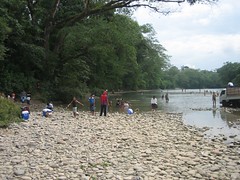
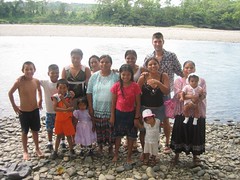
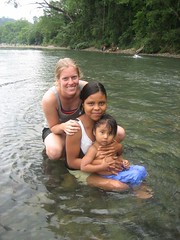
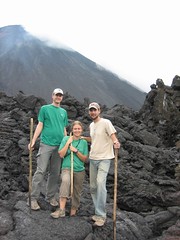
It's a tradition in Salacuim to spend Easter Sunday at the river. We went with one of our favorite families in town, the Prados, and spent the day swimming, eating and socializing with the entire community. It was a cultural event and something different than we had experienced in our time here.
IMG_7615
The river scene in Ixloc

IMG_7620
The Prado family on Easter Sunday

IMG_7608
Kari, Paola and Kennedy in Ixloc

March 18, 2008

Passing the Torch

Last week we had a chance to spend time with the volunteers that will be coming to replace us in our respective programs. We spent about 4 days with my replacement Andy, the new environmental education volunteer, in Salacuim and we had a chance to meet Ted, Corby's replacement in Ecotourism. There will be many changes coming up with the new cycle of volunteers. After realizing some of the challenges we dealt with while working in our programs, we recommended some changes to be made for the new generation. They will no longer be partnered with our NGO counterpart and rather Andy will work directly with the 4 schools in Salacuim teaching environmental education and training the teachers how to implement the curriculum into their classrooms. Ted will be living in a new Peace Corps site, Santa Lucia, which is near the entrance to the National Park Laguna Lachuá. He will be better situated to work with the park from that location as well as all the budding tourism sites in that area.

176_4672
Welcoming Andy to Salacuim

It was nice to meet the people that will be taking over and continuing on with some of our work and starting new projects of their own. I really think that Andy will be a great addition to the list of Salacuim volunteers and the kids and schools are already so excited to have him start. In terms of passing the torch, I don't think we could have asked for a better person to receive it. He's also talking about starting a blog so we can stay caught up on the happenings around town. We'll post that info as soon as we find out for those of you that have become attached to Salacuim as well.

January 22, 2008

S.P.A. Project Complete

We are finally starting to see some concrete results of a much awaited project. So much of our service in Peace Corps is about intangible projects. Many of the activities that we participate in or seeds we plant will not be realized for years to come and we may never see the results. It has been refreshing to work on a project and see it completed before we leave.

In March 2007, we started writing a grant project with the youth group, JAGUAR. They participated in several community diagnostic meetings late in 2006 to determine what the best project for the community would be. In the end, we came up with a committee of 6 young men and women from the youth group to write a proposal for a grant to build a community space next to the library to allow for more study and training space.

100_4306 IMG_2505 121_5558

As Peace Corps volunteers, we have access to a Small Project Assistance Grant (SPA) through USAID. The idea behind SPA grants is that it allows the volunteer to guide a community through the diagnostic and grant writing process, while enabling them to gain important skills along the way. The community is essentially in charge of writing the proposal and following through with the project once the funding is approved.

128_5893 128_5888 IMG_3766

In May we received $3,205 to begin the project. The unique part of this grant is that 30% of the total costs must be covered or donated as in-kind contributions from the community. The community receives a little monetary assistance to get started, but in return they must contribute and invest themselves into the project. It's a beautiful concept and for the most part was very successful in Salacuim.
IMG_2891 IMG_3756 IMG_3192

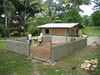
The committee was in charge of organizing all the in-kind labor from the community as well as being resourceful with the materials that we needed to supplement the $3,000. We hired a skilled mason from Salacuim at a reduced rate to do the concrete work, roof and doors, but all the kids from the youth group, the scholarship kids and all their parents were in charge of donating their time and manpower to the project.

100_4115 100_4119 100_4137

We finally finished the building in December and the group threw a small inauguration party to celebrate. After 2 years of, at times, not seeing large changes, it is wonderful to see the success that the SPA grant has brought to Salacuim.

December 26, 2007

Christmas in Salacuim

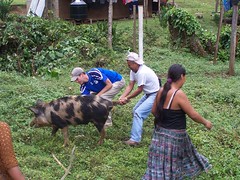
After much debate of how and where we were going to spend Christmas this year, we finally decided to stay home and experience the holiday through the eyes of Salacuim. There were many events that led up to the day and we could feel the excitement in the air as Christmas Eve approached. About a week ago, Corby helped one of our neighbors, Don Ramon, wrestle a pig in a nearby community so that he could cook it for his Christmas dinner. Not very many people can afford to purchase an entire pig, which goes for about Q500 ($65), but he was planning on cooking the meat and selling it for all those that wanted a special treat.

100_4103
Corby and Don Ramon with the Christmas pig

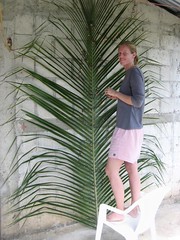
For us, it is difficult to get used to a green Christmas, especially since we have been hearing about all the snow in Minnesota this year. We struggled to find creative ways to make it feel like Christmas while it was 80 degrees. Luckily, a large coconut tree feel down in our front yard a couple days before Christmas, which allowed us to use the palm branches for a makeshift tree- lights and all.

IMG_7041
Decorating the Christmas Palm

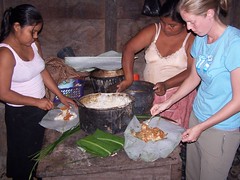
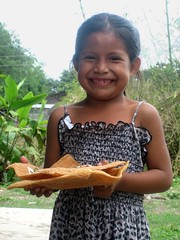
Christmas Eve is the biggest day of celebration for Guatemalans. We spent our day helping neighbors make the traditional meal of tamales, which consists of corn paste, a chile sauce and a small piece of chicken, all wrap up in a banana leaf. After being here for almost 2 years, I finally found myself liking the taste of tamales, but that has worn off over the last few days.

100_4152
Preparing tamales with the Prado family

We spent the evening at church with our friends and neighbors, singing the same Christmas songs as we sing in the states, only in Spanish. There were endless invitations afterward to join families in their homes for tamales. We were overwhelmed by the spirit of the season as people welcomed us and shared their food and company. Corby and I had a difficult time consuming 2 tamales at every house we went to and as a result we have over 10 sitting in the refrigerator right now.
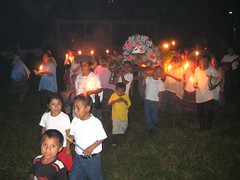
At midnight people lined the main street, some sat with chairs in their front yard and everyone threw firecrackers. The entire town was alive with excitement. The Catholic church walked through town in a procession singing songs and people spent the rest of the night into Christmas Day with their families, eating and socializing.

IMG_7046
Catholic Procession through town

While we missed being with our own families at home, we look forward to next Christmas when we all will be together again and cherish the memories of Christmas in Salacuim. We are heading to Belize for the New Year and are looking forward to seeing a new part of Latin America.

¡Próspero Año!

December 11, 2007

Cell Phones coming to Salacuim!

We've been hearing rumors for at least a few months now that the cell phone companies have been visiting the area around Salacuim and doing feasibility studies. Obviously, we've been anxious to see if the rumors are true. We've lived here for almost two years now, always with limited communication. There are a few public telephones that grab a cell phone signal with a large antenna from distant cell towers, but the result is always a scratchy connection and a 65 cent/minute charge to call the US. There is also a telephone at our NGO's office which works on a satellite connection, but its plagued by a 2 second delay and strict limits on personal calls (especially frustrating when speaking Spanish as a second language).

Also, about six months ago some new towers went up across the Chixoy River in the Quiche department that gave everyone a sort of hope that maybe their phones could grab signal in special "spots", in fact the large open field next to our house has had a faint signal if you stand in the right place for enough time and learn the tricks such as shutting-of and restarting your phone 3 times in succession while raising your left hand in the air. This ghost signal has created a culture of small groups that congregate in these "spots" with their phones every night, partially to make phone calls but also to pass time.

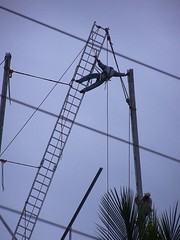
This is all about to change, as this week we noticed a large metal object growing in Salacuim's skyline, a shiny new cell phone tower! The rumor is that we will have real cell phone signal before Christmas. A team of 6 Colombian and Nicaraguan workers (better described as Trapeze artists) are throwing up a 130 meter tall tower that promises cheap, clear phone calls and the ability to actually receive calls in the last few months of our Peace Corps Service.

Construction Methods:
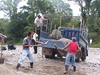
Although these guys don't have all of the safety gear required in the US, I'm impressed with their use of resources. There is no crane, but they can secure a metal section of ladder to the tower with rope and use it as a boom. From there they run a rope through a pulley system to the rear wheel of a pickup truck up on blocks. To lift sections of the tower, they start the pickup, put it in gear and use it as a crane.

Development:
An adviser to our NGO talks about development of the area as a balance between infrastructure, education, political organization, and environmental conservation; calling them the 4 "capitals". Things like education and political organization are just as important to the development of Salacuim, but they are intangible, hard to see, and actually take more time.

Infrastructure, however, is very tangible and visible. We arrived in Salacuim about 10 years after they were connected to Cobán with a gravel road. The electricity came about 4 months before we arrived, and a previous Peace Corps volunteer told us about the drastic difference: TV's, later nights on the street, etc. Earlier this year, all of the side streets were leveled and lined with gravel; a huge improvement to the steep, slippery paths of before. Offices have also been built for the local organizations: the youth group, the farmers group, and the womens group. In the near future, running water and road paving projects are in the works. We have to look at how much the face of this area is changing and just be amazed.

100_4053
Tower construction acrobatics

100_4059
The tower construction site is the most popular community gathering spot

100_4045
Use of pick-up as a crane


November 30, 2007

After-Thanksgiving Visitors: Lewis family

After a visit from Courtney & Eric, we got to be hosts for another week for the long awaited visit from my brother and sister: Joey and Stacie. We had a great time, catching up with their lives and showing them around a few places we know in Guatemala. The highlight of the trip was the 3 days we spent in Salacuim, although we had some bad luck with heavy rains while they were here. We also had the chance to visit with our original host family (for the first 3 months of Peace Corps training, way back in January of 2006) and climb an active volcano. Here are some the pictures from their trip.

IMG_4116
Lewises at Sachicha Waterfall

100_3956
At our house in Salacuim

IMG_4110
With the kids from our original host family


Lewises on Pacaya Volcano

DSCN1359
Lewises at the Biotopo del Quetzal

November 24, 2007

Thanksgiving Visitors

Here are a few highlights from our Thanksgiving trip. Courtney and Eric came from San Diego to join us for a week in Guatemala. We spent most of our time in Salacuim, but we were able to do a few things that we have yet to do in our own site, including a very muddy hike through the jungle to the other side of the park. We celebrated Thanksgiving with amazing Cuban food in Cobán and enjoyed our time together catching up and sharing our experiences with them.

IMG_4066
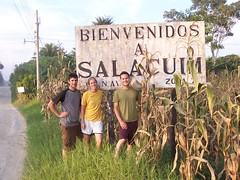
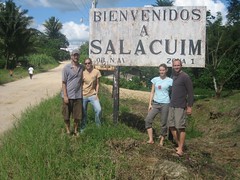
welcome to Salacuim

IMG_4010
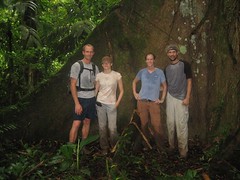
a muddy hike through the jungle to Rocja Pomtila

IMG_4051
Courtney and Maria (scholarship sponsor)

IMG_4057
spending time in Salacuim

November 9, 2007

Benpec el Castaño, Historic Day

Today the neighboring town to Salacuim, Benpec el Castaño, held a ceremony where the community members received titles to their land after a long and arduous process. This town is only a 30 minute walk or a short bike ride from Salacuim, and Kari & I often go there to visit the river for swimming or just to pass time. Our Peace Corps site-mate Nicole works with a womens group from Castaño that makes hand woven fabrics. I've worked with their community association this year to form a group that was trained in the principles of community tourism. So this community is really part of our Peace Corps "site"; we've made friends and memories there.

It was special to see a group of farmers that have never owned land, achieve something that will benefit them and their future generations. As Guatemala has a long, long history of land rights struggles, it's encouraging to see that at least some local farmers are receiving the basic necessity to build a better future for their families: a title deed to their land.

Here are the few of the details of the purchase:
  • 75 families received land, all as part of an farmers association
  • each family will receive about 12 "manzanas" of land (about 21 acres)
  • Each family will pay subsidized price of Q11,800 over a maximum of 8 years for their land (through the local association)
  • The community will also receive support with various production projects to help them get started (pineapple, cacao, reforestation, cattle, and tilapia)
  • Their are about 1500 acres in the community, and the sale price (from a private owner to the government) was Q2,400,852.50. This implies that the land is worth about $210/acre.
IMG_3886

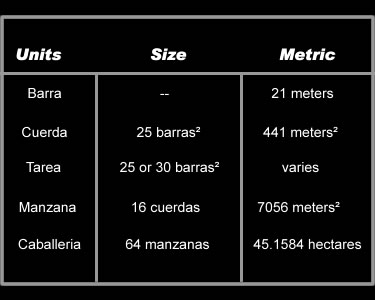
Guatemalan Units of Measurement

Guatemalans use the metric system, but they are still kind of trapped between rural farmers who still use their traditional units of measurement and influence from US English units. You buy gas by the gallon, drive stretches of road in kilometers, and you plant corn by the cuerda. Below is a list of distance and area measurements used in Salacuim, Guatemala.

Untitled-1

October 15, 2007

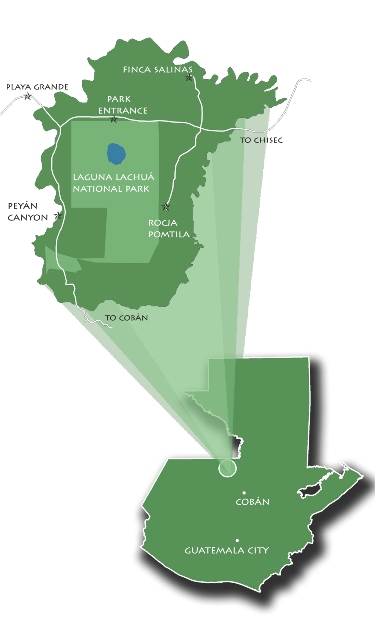
Ecoregión Lachuá

Ecoregión Lachuá is where we work. Kari made this map as part of some new eco-tourism promotional material.
map layout

October 14, 2007

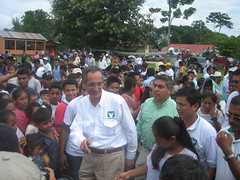
Álvaro Colom Visit to Salacuim

Guatemala is in the heat of a campaign leading up to it's presidential elections on November 4. Salacuim history was made today when this small aldea of 2,500 people received its first ever presidential campaign visit from Álvaro Colom. He came in a helicopter, talked for about an hour and then his team accepted letters of request from community members seeking community projects if he were to become president. Afterwards, there was squabble around the truck that was throwing out 50 cent bags of kool-aid and little pieces of bread to the locals.

IMG_3817

October 12, 2007

Carpe Diem Visit to Lachuá

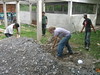
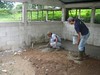
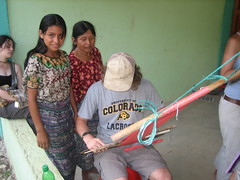
Last week we had the good fortune to be hosts to a group of 15 Americans that came for a week long visit to Laguna Lachuá and Salacuim. They came with a ton of energy and willingness to contribute to community projects in the area. They were in week 4 of a 3 month long trip through Guatemala, Honduras, and Costa Rica (link to their blog); all of them learning to speak Spanish and doing community service along the way. I think they all really enjoyed being in our area: visiting the Laguna Lachuá Park, learning about the hand made weaving from TESA (women's group that Nicole works with), working really hard pouring a cement floor in the youth group construction project, harvesting corn with a local farmer, helping to clear weeds from a reforestation project, sifting dirt for the tree nursery, and helping out on a Tilapia farm.

We felt lucky to host such an active group and watched a wonderful exchange of cultures between the locals and the visitors. Most of all I also enjoyed playing in a competitive basketball game with people taller than me.

IMG_3757
Helping mix concrete by hand

IMG_3742
Learning how to weave

September 28, 2007

A new way to celebrate

September 15th is Guatemala's Independence Day. This year it happened to land on a Saturday, which conflicted with the majority of the church schedules in Salacuim. It also would be an incredible mistake to celebrate independence day and have parades and activities on a weekend. It's not a traditional Guatemalan event unless the kids get out of school for at least a week.

This year, Salacuim decided to do something different. They decided to have a fair. Most towns in Guatemala have their yearly fair dates set and it's a big deal. Salacuim has never been a fair town. We are the town that longs to have a fair, but have never been fortunate enough to have one. This year we were inundated with people from all around the region, just waiting to see what kind of activity we could put on.

<span class= <span class=

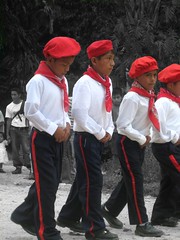
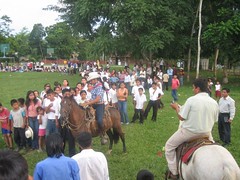
Monday started out with a huge parade down the main street of Salacuim. The entire town came out to watch. All the schools participated and it actually turned into something much bigger than I expected. In the afternoon, there was a mass exodus to a nearby field where the first ever Salacuim rodeo was held. Everyone gathered around to see the best bull riders in the area take their turn. The energy in the town was amazing.

<span class=

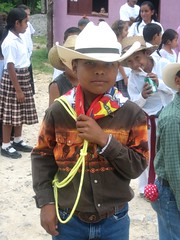
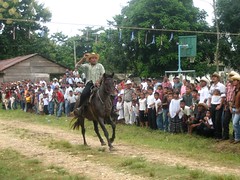
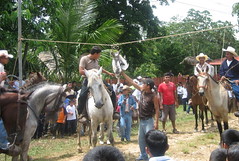
On Tuesday we celebrated our 3rd anniversary with a horse race in our front yard. The street that runs in front of our house was converted into a racing strip for horses. A rope was hung across the street between two poles. On the rope were little rings with ribbons. The object of the game was to run your horse full speed, as the rider tries to put a pencil through the ring. The event started to get a little unusual for us when they hung a live duck upside down by its feet and it soon became part of the competition. Corby did a nice job illustrating the event in his blog below.

<span class= <span class=

As nightfall came, the park in front of our house was transformed into a midway. Complete with carnival games, a makeshift movie theater and dancing. That night, it was apparent to me that our little town is changing and will continue to evolve no matter how slowly the movement seems to be at times. Whether the changes are good or bad, I couldn't help but feel a sense of pride to live where we live over the last couple days and to be part of the events that brought the town together.

September 26, 2007

City Duck, Country Duck

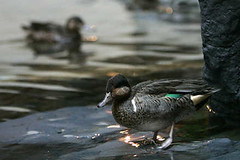
Recently, the stories of two ducks with similar, gloomy fates have recently served to compare and contrast the differences between cultures.

This past weekend a domestic duck living in an ornamental pond in a high-society downtown St. Paul Minnesota hotel(our hometown before we came to Guatemala) was brutally attacked by a hotel guest that apparently ripped its head off in the hotel lobby informing the other guests that he was hungry. Farther to the south in rural Guatemala, we were witnesses this week to a "pato encebado" contest as part of a local celebration where a group of cowboys hung a living duck up by its legs and then shaved and greased its neck; all of this with the objective to take turns attempting to pull its head off with their hands during passes on their galloping horses.

The real lesson in all of this is found in the reactions of the society. In St Paul, the assailant is facing a felony with up to two years of jail time and a $5,000 fine while a high class hotel is considering some sort of increased security or fencing system to protect the rest of their ducks. In our town, the winner of the contest was awarded a prize of Q200 and much of the normally very reserved indigenous crowd really got their spirit up with shouts such as "¡arranquela hombre!"
hotel duck
City Duck

IMG_3578
Country Duck

Read story of St. Paul Hotel Duck: http://www.startribune.com/462/story/1440073.html

August 31, 2007

The Stuff That Happens

IMG_3139

Last night Kari and our site mate Nicole were the judges in a mini beauty pageant in Salacuim. The event was aimed at selecting the "Novia del Ganadero", or the "Cattleman's Girlfriend" who will be involved in the upcoming rodeo in late September. The biggest highlight/lowlight of the afternoon was a toss-up between when the stage collapsed breaking a kid's leg, and when one contestant lost control of her galloping horse and almost trampled the crowd. The lowlights aren't really a laughing matter, but you can't help but see a general trend and compare/contrast to the States.

With about 7 months left before our scheduled return to "normal life", I've been thinking a lot lately about how precious every day of our experience down here is. I can't say that I enjoy the typical daily chaos I've learned to put up with: a shrieky blown-out speaker system pounding 20 feet from my desk on all day on a day when I had planned to catch up with computer work, or upsetting Kari with my inability to track and kill the huge spider with the egg-sack that had just climbed into her clean clothes pile, or the megaphone charged vehicles that decide to park on our street and blare presidential ads at 7am, or the holes in the office roof that send us running to cover everything up if a storm passes. (these are all events from today, except the spider which was yesterday)

But at the end of the day sometimes you just have to soak it all up and appreciate the experience as a whole, think about what a challenge you've overcome to adapt, cherish the soul-filling energy that comes with overpowering the daily obstacles, and be thankful for the stories that come with it.

Here are some more pictures from last night's event...

IMG_3140
The Judges


IMG_3137
The contestants

June 8, 2007

Top 10

There are many mornings when I wake up and wonder what it is I am doing and accomplishing here. While there are frustrations, there are also things that I cannot imagine living without that I have discovered during our time in Salacuim. Each day makes me appreciate the little things.
A common first reaction when visiting a third world country or a very poor area tends to be focused on the surface ugliness. Whether it be the extreme poverty, trash everywhere or lack of hygiene practices. It takes a long time to see beyond what we are trained to see as beautiful. I think I have reached the point where I can look beyond the surface and see what lies beneath. An enormous amount of potential and one amazingly BEAUTIFUL place.

my top 10 of Salacuim ...
sonia park DSC03659
hugo river jungle shower ride
pina mainstreet hammock2
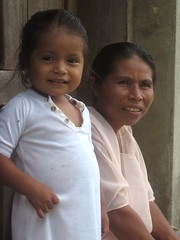
the faces, laguna lachuá national park, time together, at your door service, chixoy river,
jungle shower, the ride, fresh pineapple, main street, hammocks